01 / The idea
Something properly unusual
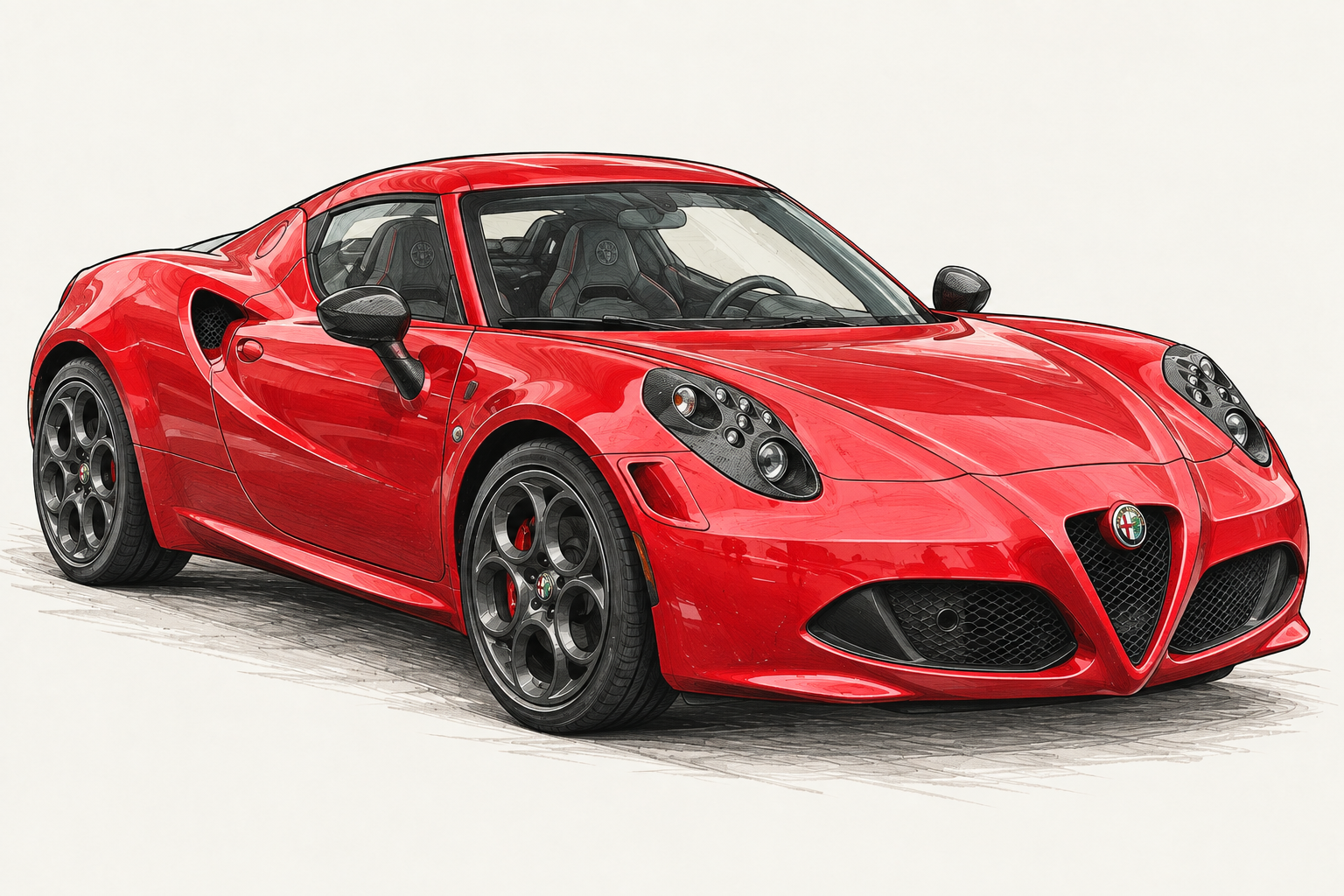
The 4C is the sort of car that makes a coffee stop take longer than planned. There is plenty to look at before anyone gets to the engine: the tiny cabin, the broad rear bodywork and that exposed carbon fibre sill.
Alfa gave it a carbon fibre monocoque, an engine behind the seats and unassisted steering. Built at Maserati’s Modena plant, it brought some unusually expensive engineering to a very small sports car. The quoted 895kg is a dry figure, so it should never be compared directly with another car’s ready to drive weight.
That construction is the reason to be interested. It is also a useful warning. The 4C was never designed around making a commute feel effortless.
02 / Engine & gearbox
Enough engine. Plenty of noise.
The 1.75 litre turbo four produces 240PS and 350Nm, sent to the rear wheels through a six speed TCT twin clutch gearbox. There was no manual option. Alfa quoted 4.5 seconds to 62mph, which leaves little need to apologise for the cylinder count.
Period road tests describe a marked arrival of boost rather than a perfectly even swell of power. Auto Express found the delivery spiky and the turbo lag noticeable. Autotrader was more enthusiastic about its acceleration and quick gear changes. Both accounts fit a car whose appeal depends on how much roughness you enjoy.
Our view: the gearbox is something to try before falling in love with the photographs. If changing gear yourself is central to your ideal Sunday drive, the 4C cannot offer that particular pleasure.
03 / On the road
Raw does not always mean better
Unassisted steering sounds wonderful on paper. The reality drew divided responses. Autotrader praised the balance and agility of its test car, while noting that the optional sports suspension was very firm at low speeds. Evo was much less convinced by the steering and the overall polish.
That disagreement matters more than a tidy score out of ten. A small, light sports car can still be tiring when the surface is poor. Auto Express also reported twitchy steering and a ride that made smooth progress difficult.
A proper test drive should include ordinary roads, awkward junctions and a stretch of motorway. A car that feels exciting for ten minutes needs to remain appealing for the whole journey home.
04 / Living with it
Try getting in first
The exposed structure is a large part of the cabin’s appeal, but this is no plush little grand tourer. Road and engine noise feature prominently in contemporary reviews. Long journeys ask for more tolerance than the looks might suggest.
Before buying, check that you can get in and out comfortably and settle into a sensible driving position. Bring the bag you actually use. Small practical irritations matter when they happen every time you drive.
For a used example, make documented maintenance, accident history and a specialist inspection part of the decision. With unusual construction, a cheap purchase price is not a substitute for understanding the condition of the car.
_front.jpg)